
Lavender (Lavandula officinalis, syn. L angustafolia) is a soothing nervine brought to the rest of the world from the Mediterranean region.
Lavender is part of the Lamiaceae family which includes bee balm, catnip, and spearmint.
Lavender Energy
Lavender is projective in nature, corresponding to the energy of Mercury and to the element of air.
Lavender balances the energy center at your brow, supporting understanding and cognition
Lavender Medicine
Lavender is an aromatic that supports works directly through your nervous system to support relaxation. Unlike an adaptogenic herb that teaches your body to moderate the effects of stress, Lavender can bring immediate support when you are experiencing stress, headache, or pain.
It is an anodyne analgesic, antispasmodic, and has antifungal properties.
Stress and tension, migraines, and headaches can benefit from both the aroma of lavender and the infusion.
Sipping lavender in an herbal tea may calm bowel spasms and support those with Crohn’s disease.
Burns can benefit from a topical application of lavender oil.
It is good to note that some may find lavender to be a stimulant rather than a relaxant. Also of note, you can be reactive to any ingredient. Be cautious as you determine how you react to lavender.
How to Grow Lavender
Lavender is an attractive flowering perennial that grows as a small, woody shrub. Blossoms are purple and grow 6 to 10 in the form of a spiked stalk. Its leaves are 2 inches long, opposite, smooth edges, and silvery graish green.
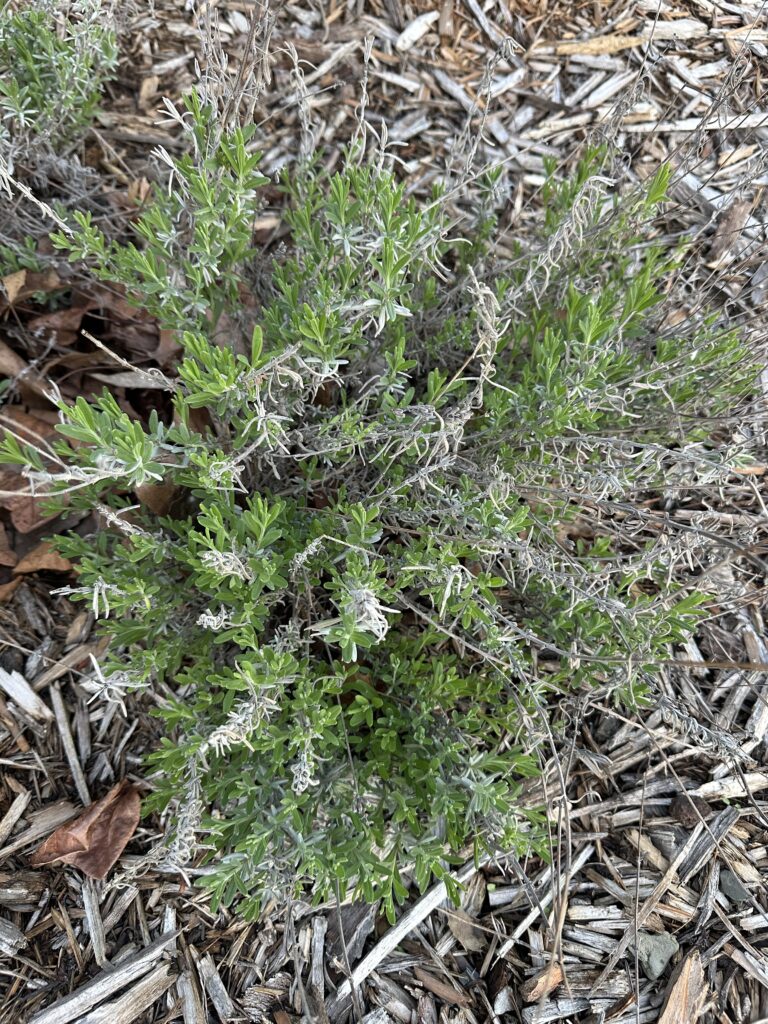
Lavender does well in containers or in your garden. Use soil that is light, tends toward dry, with good drainage. It can also flourish in stony soil or a rock garden.
Lavender struggles when starting from seed but does well when started from a summer cutting. Keep your new lavender plant protected, inside if you can, and clip buds back regularly during the first year to encourage a healthy and bushy lavender plant. You can safely move it outside the following spring.
For the best harvest, cut yoru lavender blossoms before they open fully.
Lavender plants may live up to 30 years when supported by healthy soil and temperate weather. 5 years is average. Lifespan, including whether lavender is an annual or perennial, is dependent on your growing zone.
How to Use
You can receive the benefits of lavender in a variety of ways. Lavender growing in your garden can fill the air with fragrance creating an atmosphere of relaxation. Bring this indoors with a potted lavender. Fresh or dried cut stems in a vase also support you through your environment.
You can infuse lavender in honey, oil, or water depending on your desired results. Lavender tincture is an easy to carry stress buster.
Infuse lavender blossoms in water to create tea.
Infuse lavender blossoms and leaves in bath water to create a relaxing soak.
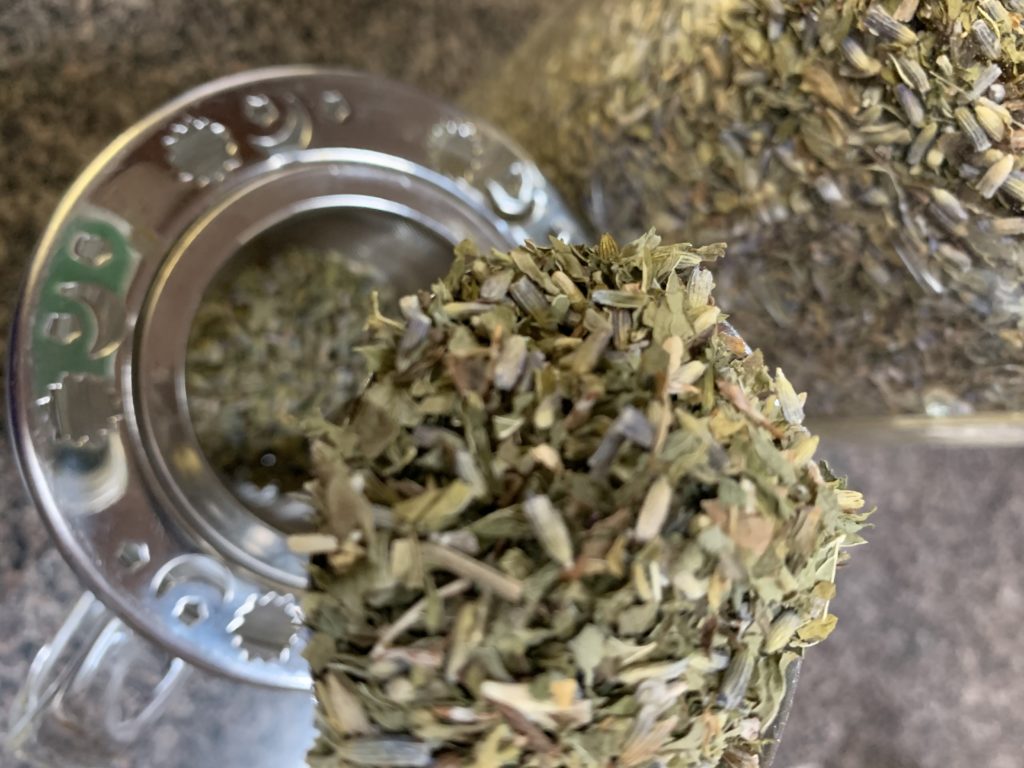
Infuse lavender blossoms in oil. Use infused oil to massage temples, shoulders, or entire body. Craft infused oil into balms.
Lavender infused honey can be used as a sweetener for tea.
Lavender blends well with Lemon Balm (Melissa officinalis), Sage (Salvia officinalis), or Spearmint (Mentha spicata).
Scattered lavender blossoms can maintain peacefulness and lift spirits.
Lavender blossoms can be burned on a brazier for smoke clearing and purification rituals.
Tuck a lavender sachet in drawers, closets, or under your car seats.
Summary
Lavender is a member of the same family as the mints, bee balm, and catnip that originated in the Mediterranean region but is grown and used around the world.
Lavender is a nervine which means that it works through the nervous system to relax your body. It can have a positive impact on migraines, headaches and other pain, and spasms.
Energetically Lavender connects with the concepts of cognition and understanding, corresponds with the planet Mercury and the element of air, and balances the energy center at your brow.
Bibliography
These are affiliate links. I may receive some compensation if you invest in one of the books listed below.
Easley, T. and Horne, S. (2016) The Modern Herbal Dispensatory. North Atlantic Books
Cunningham, S. (2018) Cunningham’s Encyclopedia of Magical Herbs. Llewellyn Publications
Gladstar, R. (2012) Rosemary Gladstar’s Medicinal Herbs. Storey Publishing
Carr, A., Cassidy, C., Cohen, E, Decenzo, A., Hunt, M., Hurley, J.B., Hylton, W.H., Kowalchik, C., Milius, S., Wilson, K., (1987) Rodale’s Illustrated Encyclopedia of Herbs. Rodale Press
Want new blog posts sent directly to your inbox? Subscribe today!
All posts at feelcalmclearandconnected.com are created by a human, not by a computer.
Photographs and other graphics used here and not otherwise identified are either my personal photographs and graphic design or accessed through the public domain.
The information included in this blog should not be used as medical advice. Seek immediate assistance from a licensed professional in the case of a medical emergency. Consult with your physician regarding medical questions.